

Introduction to the IEO Economic Competition
Competition value
The core value of the IEO lies in three dimensions: authoritative endorsement, academic advancement potential, and competency certification. As the sole economics competition among the world's 13 International Science Olympiads, it was initiated by Nobel laureates in economics and receives support from institutions like the National Research University Higher School of Economics and McKinsey & Company, ensuring unparalleled academic authority. Its results are highly recognized by top universities such as Harvard and Oxford, with over 60% of global medalists gaining admission to the world's top 50 universities. This makes it a crucial advantage for applications to business and economics programs.
IEO 2026 Global Station Launched in Suzhou, China
IEO-China Group Introduction
Rookie Regular Class (JUNIOR – SL):
This course is designed for students in grades 6-9 and is suitable for beginners with no prior knowledge of economics. Teams of 3-5 people or individuals are allowed to participate. The assessment is conducted in both Chinese and English. The beginner level consists of 40 questions, covering 20 microeconomics questions, 12 macroeconomics questions, and 8 personal finance questions, with a total score of 400 points. Outstanding participants in this level will be eligible to participate in the Hong Kong International Invitational Tournament.
Junior – HL:
This program is designed for Grades 9-12 students, focusing on academic improvement to prepare them for overseas university applications. Teams of 3-5 students are required; individual participation is not permitted. The assessment is conducted in both Chinese and English. The format, number of questions, and maximum score for the beginner level are the same as the regular rookie group. Advancement pathways lead to international invitational tournaments in Singapore and Hong Kong.
Senior Group:
This group, targeting students in grades G9-G12 with a basic understanding of economics and aiming for advanced competitions, is the core group for selecting the national team. Teams of 3-5 students are required, and the assessment is conducted entirely in English. The beginner level consists of 45 questions, including 20 microeconomics questions, 20 macroeconomics questions, and 5 questions on international economics and current affairs, with a total score of 450 points. Outstanding participants in this group can advance to the national team and represent China in top-level competitions such as the 2026 Suzhou Global Finals.
IEO-China Year-Round Activities
Beginner Level (December 21, 2025):
The assessment will be conducted online in a nationwide, closed-book format, focusing on fundamental economic knowledge and primarily using objective questions. Different groups will have different emphases: the newcomer group will focus on basic macroeconomics and microeconomics and personal finance, while the professional group will also cover international economics and current affairs. This stage is the only pathway to the Chinese finals; top-ranking teams and individuals will qualify for advancement.
China Station (March 2026):
The event will be held offline and will employ a multi-stage comprehensive evaluation model. It includes a closed-book written exam on economics and finance, team presentations on business case analysis, a social innovation showcase, and academic workshops, comprehensively assessing students' academic foundation and practical abilities. Three national teams will be selected; teams one and two will compete in the Suzhou global event, while team three will travel to Sydney to participate in the AAEO Asia event.
International Stage (April – July 2026):
This phase features several key locations. In May, participants can attend the Hong Kong station to experience the business atmosphere of an international financial hub; in June, there is the Singapore station, focusing on international trade and shipping-related issues; and in July, in addition to the AAEO Asia station in Sydney, Australia, there will be the Suzhou global station, which will be held in mainland China for the first time, bringing together students from more than 65 countries and regions to participate in this top-level economics competition.
IEO-China Team Formation Rules
[Special Team Formation Rules for the China Station]
After qualifying for the 2026 Spring China event, there will be no more individual competitions; all qualified students must form teams of 3-5 people to participate. If a qualified student fails to form a team independently,
The organizing committee will assign teammates to them to ensure the smooth conduct of subsequent assessment stages that require collaboration, such as case analysis and team presentations.
Rookie Regular Class (JUNIOR – SL):
G6 – G9
The team format is the most flexible, allowing participants to either form a team of 3-5 people or compete individually, making it suitable for younger students with a weak foundation in economics.
Junior – HL:
G9 – G12
There are strict team requirements; only teams of 3-5 people are allowed to participate. Individual participation is not accepted. It is suitable for students with a certain foundation who want to improve their academic abilities.
Senior Group:
G9 – G12
The team formation rules are the same as those for the Rookie Advanced Group, requiring teams of 3-5 people to participate. There is no individual participation channel, which is suitable for students who want to challenge themselves with advanced competition.
Discussion Topics of Past IEO Business Cases
2021 Latvia
Assisting automobile manufacturers in formulating product positioning and export strategies and identifying overseas market opportunities
2022 China
JD Logistics has developed carbon reduction pathways and strategic recommendations to help achieve its "dual carbon" goals.
2023 Greece
Support Greek universities in achieving their goals of optimal land resource utilization and environmental sustainability.
2024 Hong Kong, China
Examination content
Microeconomics:
Basic concepts; consumer behavior; producer behavior; market structure;
Macroeconomics:
Macroeconomic indicators; Economic growth; Macroeconomic policies;
Personal Finance (Key points for the rookie group):
Personal budgeting; financial tools and risk management; credit and debt management;
International Economics (Key areas of examination for the professional group):
International trade; international finance.
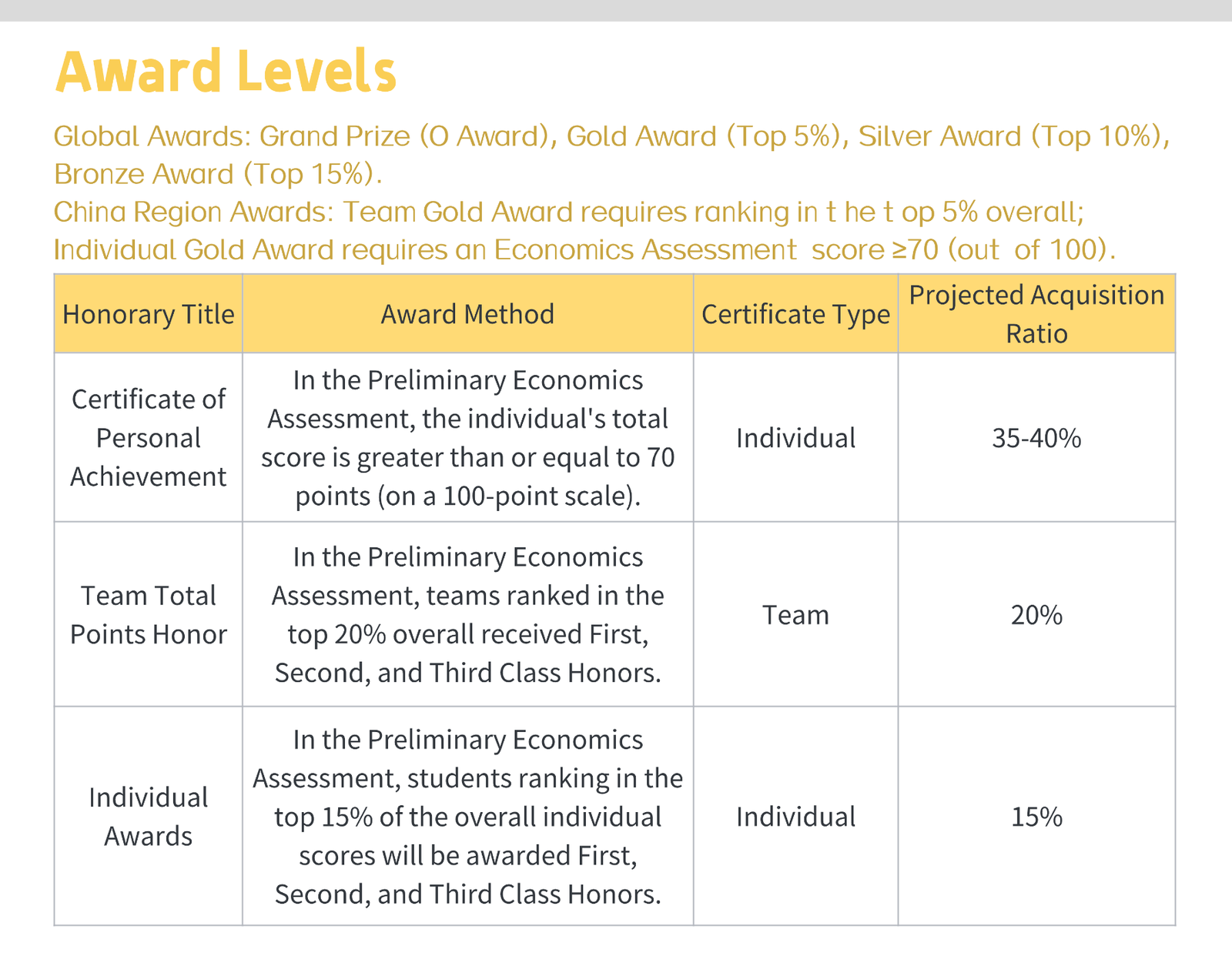
Award Settings
Past exam questions
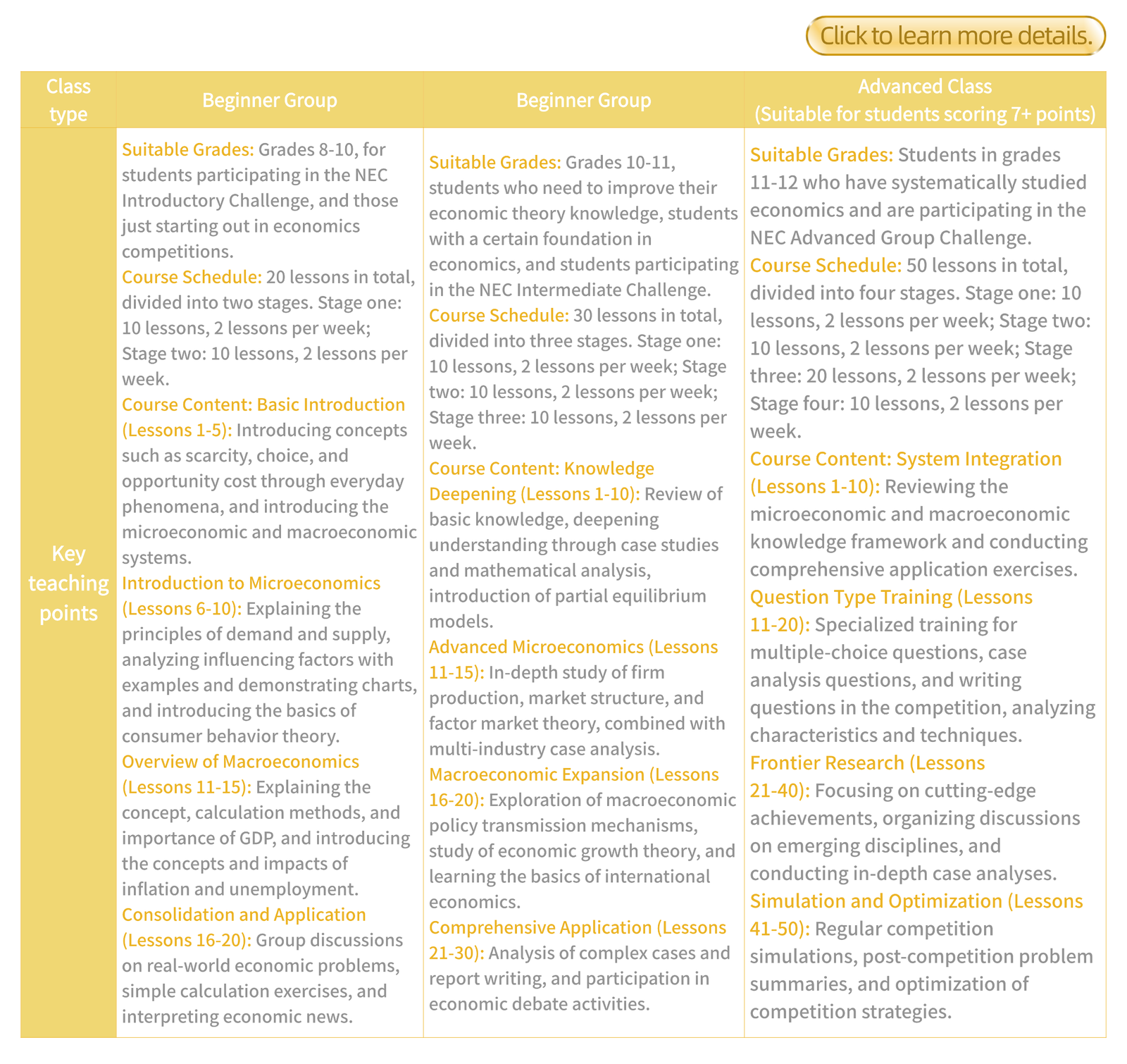
NEEC Class Types
Recommended reading materials
NEEC Recommended Reading Materials
NEEC Economic News
Course Features
- Lectures 0
- Quizzes 0
- Duration 10 weeks
- Skill level All levels
- Students 0
- Assessments Yes