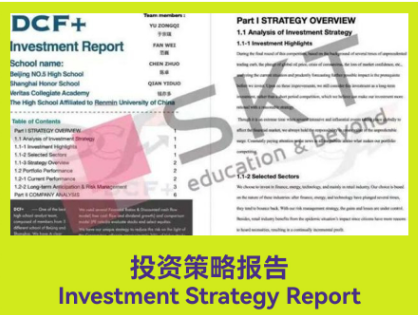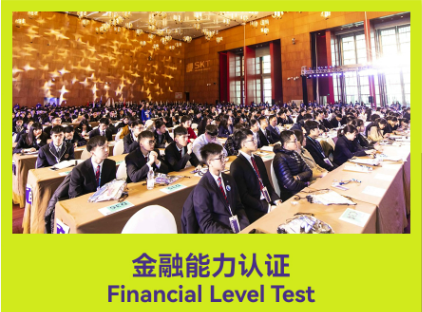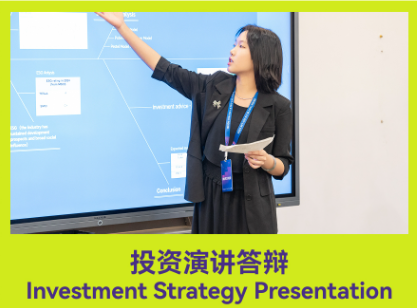


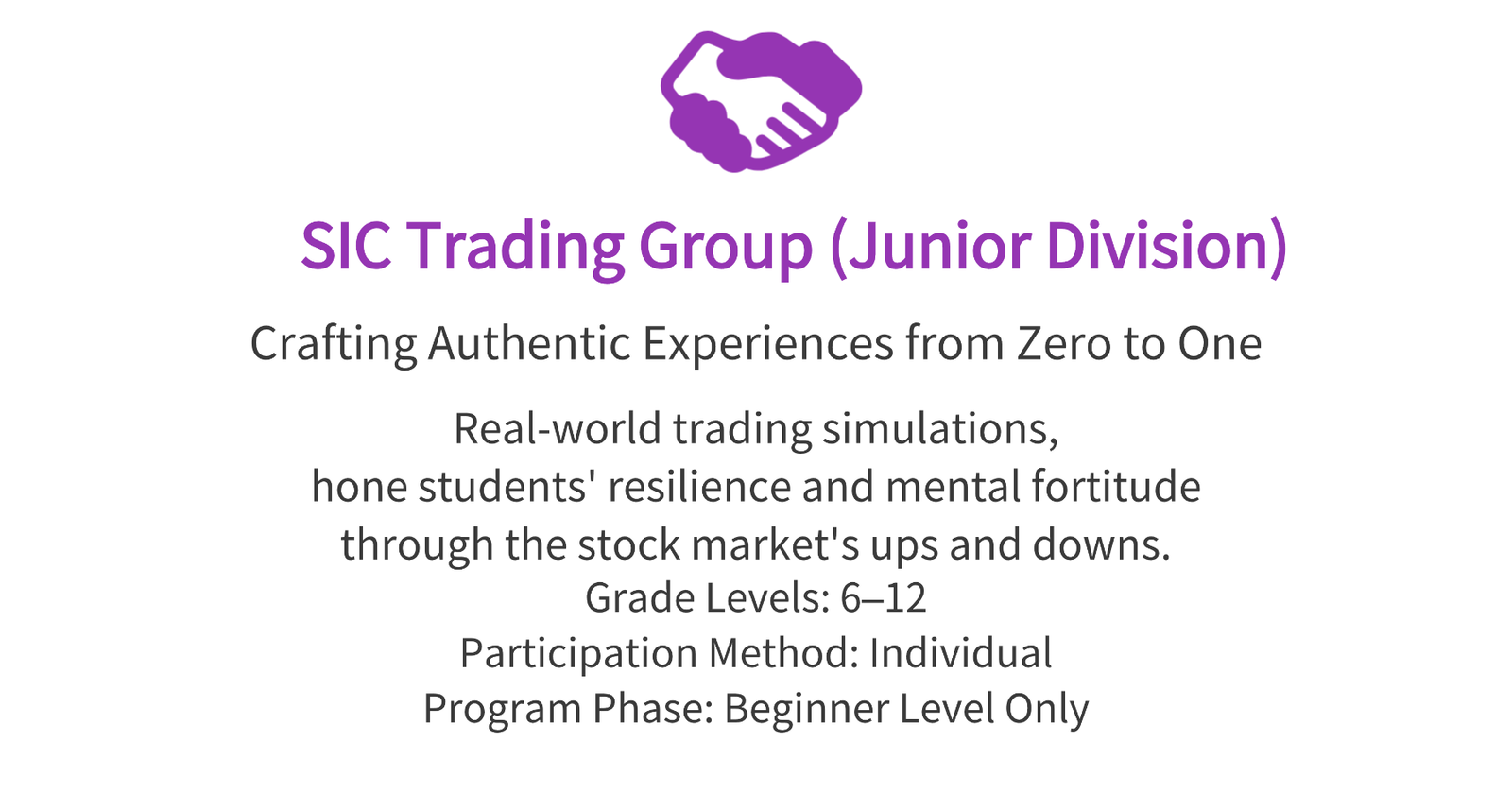
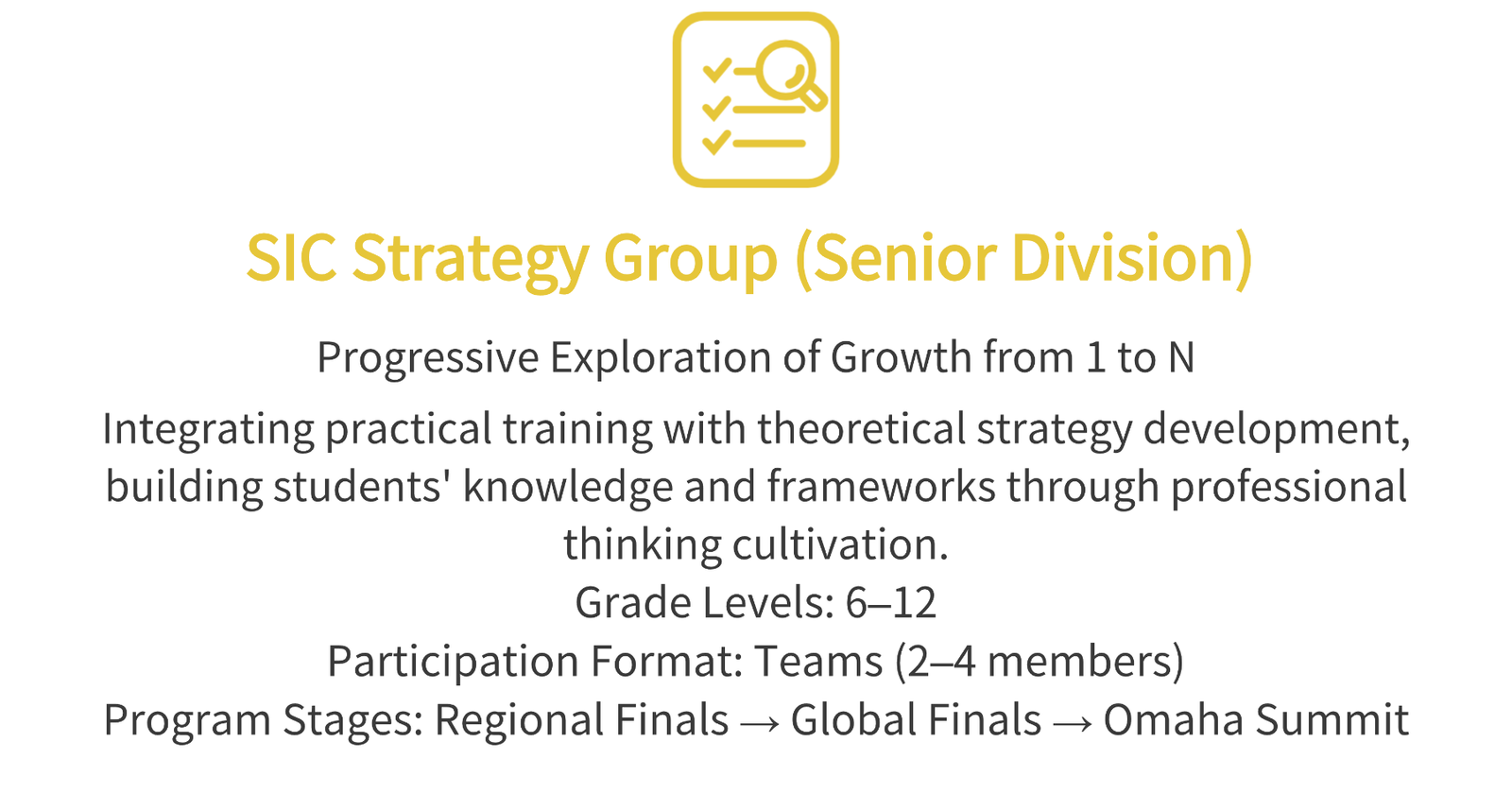
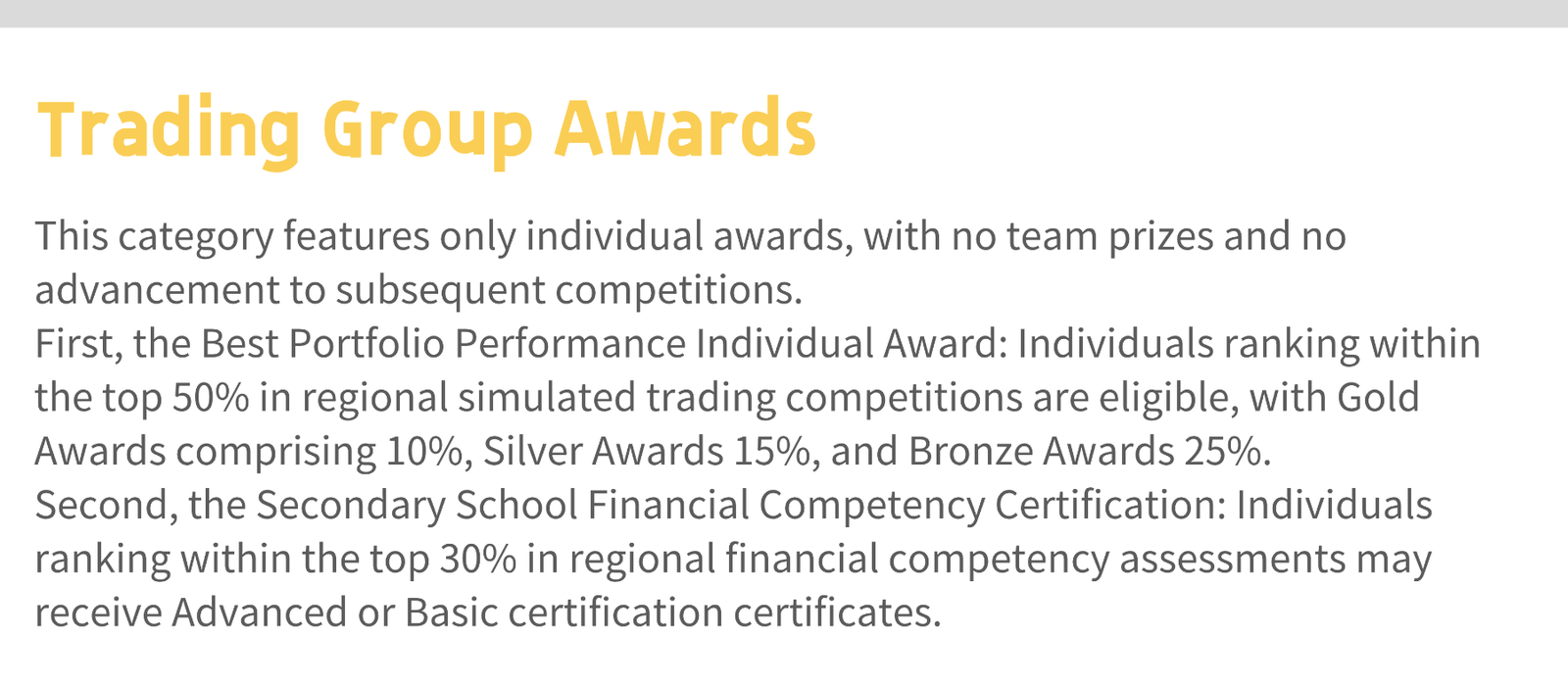
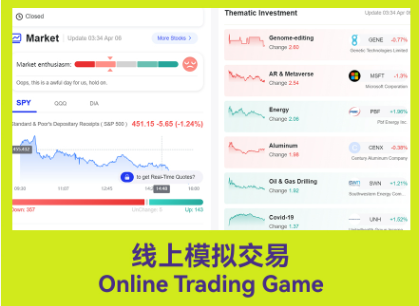
SIC, or the School of Investment Challenge, is an international competition accredited by both CEE and ACME, suitable for students in grades 6-12, and often referred to as "Little Wharton." The competition is held twice a year, in spring and fall, with separate categories for trading (individual participants) and strategy (teams of 2-4 people). The competition includes a preliminary round and a global round, requiring participants to complete a virtual investment in US stocks and submit an investment report. The global round also requires a presentation entirely in English. It emphasizes "economic theory + financial practice," assessing abilities such as industry analysis and risk management. It is less difficult than the Wharton Business Competition, making it suitable for beginners. Its results are recognized by top universities, enhancing business school applications and serving as a pathway to more challenging business competitions.
The SIC competition is highly prestigious. It is accredited by the US CEE and recognized by top institutions such as Wharton and MIT Sloan. The global gold medalist, 82%, has been admitted to top 30 US business schools in the past three years. Goldman Sachs, McKinsey, and other organizations also incorporate it into their talent evaluation systems. The competition simulates real US stock trading and requires students to write professional reports and defend their findings, enabling them to master rare skills such as financial practice and financial modeling. Its content is highly aligned with international curricula such as AP and IB, potentially boosting scores in related courses. Furthermore, participants have the opportunity to connect with Ivy League elites and Wall Street leaders, expanding their valuable network and laying a solid foundation for future academic and career development in the financial field.
Company Analysis:Financial statement analysis; Company valuation methods;
Industry Analysis:Industry life cycle; Industry competition landscape;
Investment strategy and asset allocation:
Investment strategy:Long-term and short-term investment strategies; investment strategies for different assets;
Asset Allocation:Principles of asset allocation; asset allocation adjustment;
Investment decisions and trading practices:
Investment decision process:Information collection and analysis; investment decision-making models and methods;
Trading practice operations:Trading platform and trading rules; trading strategy implementation and risk management.
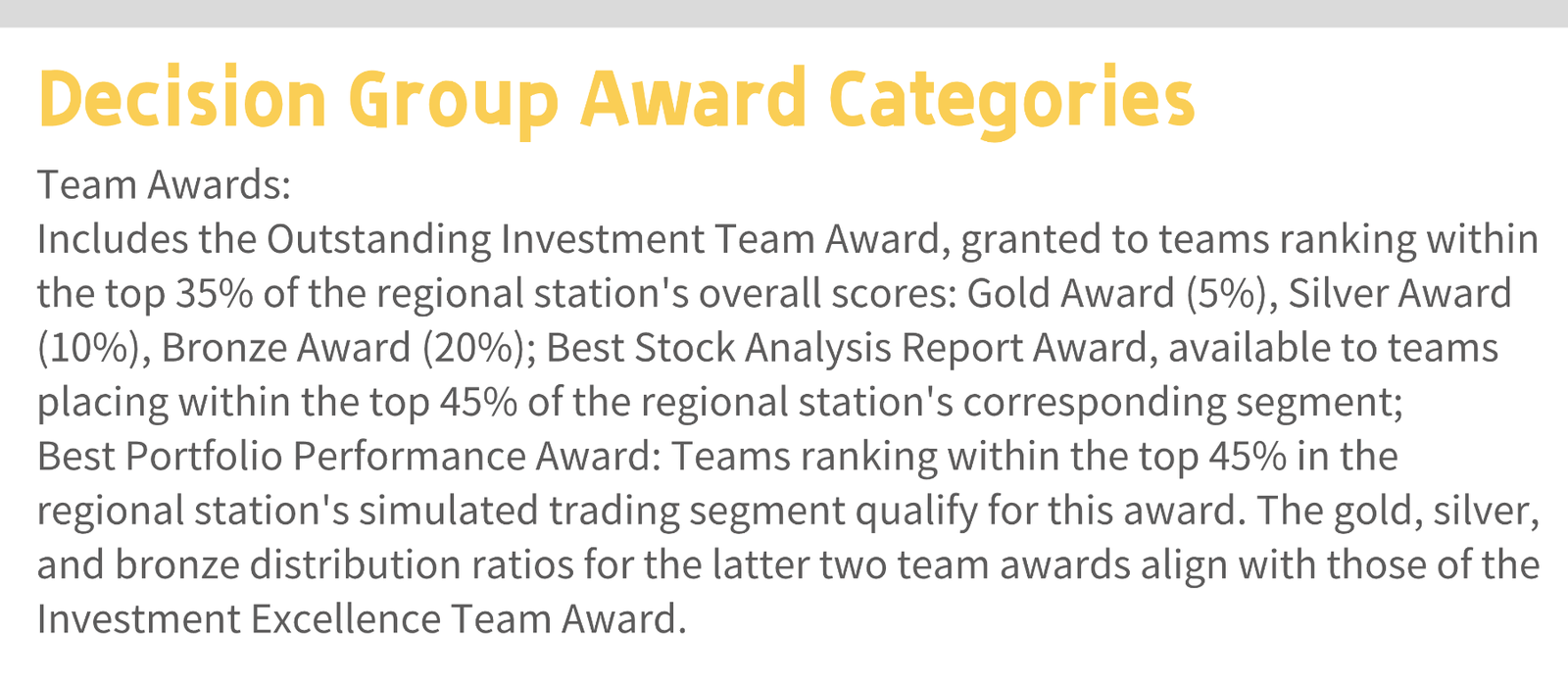
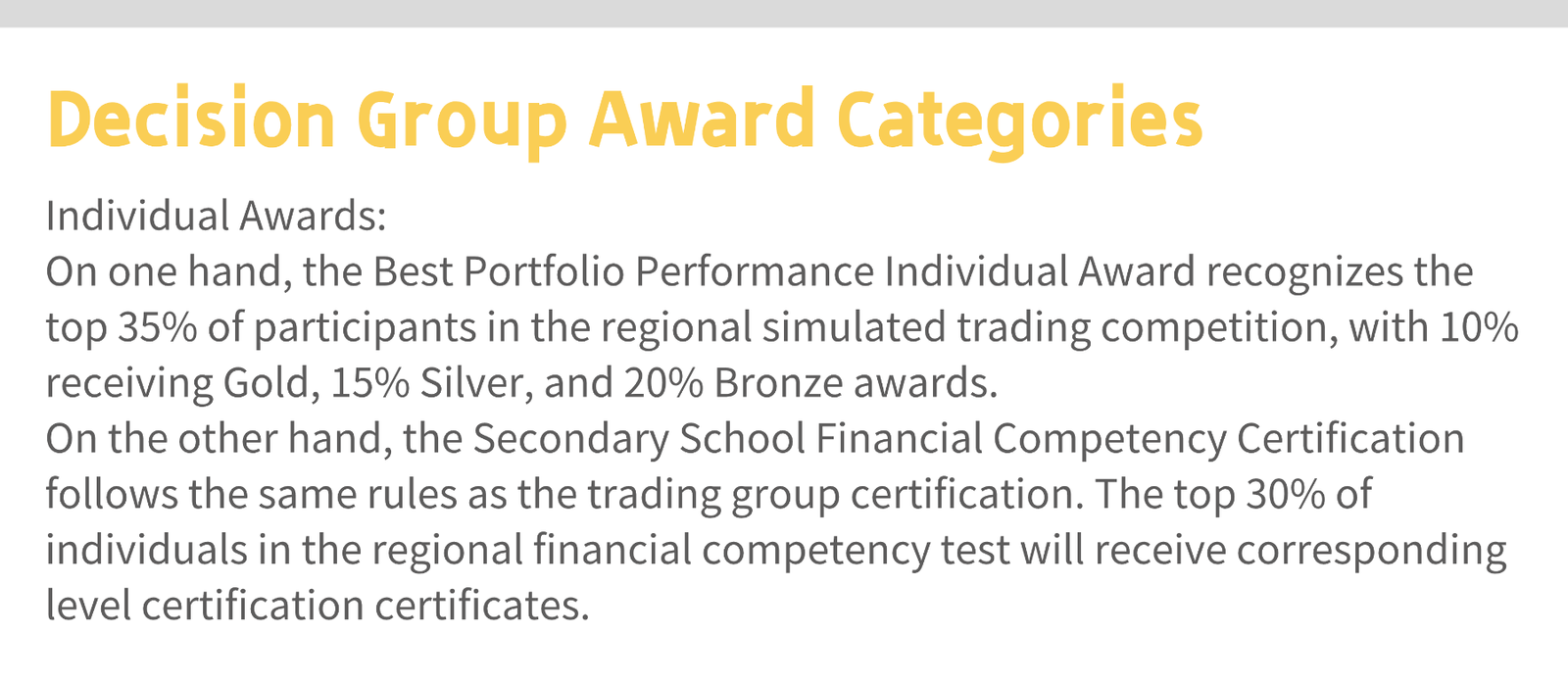
Award Settings
Regional Station Training Phase Advancement Methods
Direct advancement:
The top 40% strategy teams in each region will directly advance to the global training stage. The actual number of teams advancing will be dynamically adjusted based on the total number of teams participating in the regional station that season, in order to ensure the fairness of the competition.
Second round advancement:
Strategy team members who do not qualify directly will participate in the national overall ranking. Teams ranked in the top 20% can submit a motivation letter to apply for a waiting list qualification. The organizing committee will comprehensively review the team's regional performance, the submission time and quality of the motivation letter, and other factors. Teams that pass the review will qualify for the global finals. The number of teams qualifying through this method will not exceed the number of teams that qualify directly.
Fast pass upgrade:
Once the school has registered and paid fees to a minimum of 20 people, one global station direct pass will be awarded for every three teams that actually submit reports in the strategy group. This qualification is only valid for teams from this school and cannot be used for teams from other schools. It will only be effective if the number of teams that directly advance from this school is less than the number of direct pass slots available. Ultimately, the pass will be awarded to the highest-performing team in the school's strategy group that did not advance. Teams using this qualification must have actually participated in the regional station training phase.
NEEC's US Study Abroad Program welcomes you to join us. Learn more about the background of the East Coast University Visit and Study Camp program. The East Coast refers to…